Tokyo Sumo Morning Practice Tour
Tours & tickets

Hand-picked by our editors — only the best 5 ringside experiences from 12 reviewed.

Open today 07:30–09:30
Attendance: Light — weekday morning
Practice sessions are subject to daily schedule changes; check the official site calendar.
Free cancellation Instant confirmation Mobile voucher Verified partner Small group access
Tickets

Choose your ticket

Verified partners for every tour, free cancellation where available, and instant confirmation on every booking.

Sumo Morning Practice Viewing & Photo Experience 2 hr
Standard Entry

Sumo Morning Practice Viewing & Photo Experience

★ 4.8 (314)
€100
per person
Instant Mobile voucher Flexible — change up to 24h

Get up close to Japan's elite sumo athletes during their intensive morning training session

Reserve
Sumo Morning Practice with Ringside Access & Wrestler Photo 2 hr
Standard Entry

Sumo Morning Practice with Ringside Access & Wrestler Photo

★ 4.8 (136)
$95
per person
Instant Mobile voucher Flexible — change up to 24h

Watch elite wrestlers train at a traditional stable, then pose for photos with these incredible athletes

Reserve

Prices from verified partners. Availability updates in real time at checkout. Free cancellation policies apply where shown.

Highlights

What you'll see inside the attraction

The landmarks, rooms, and views travelers on this tour remember — all visible on a single visit.

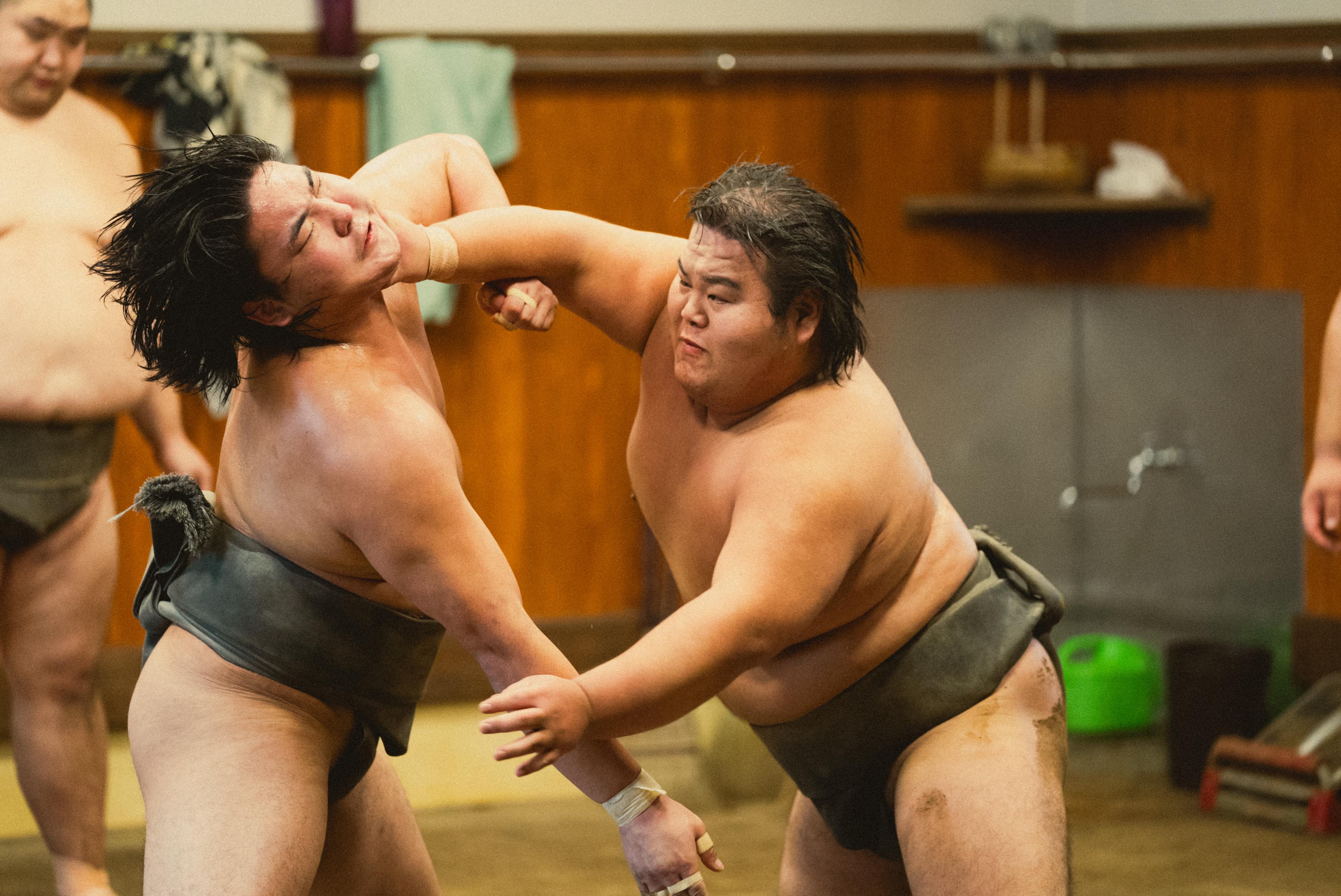
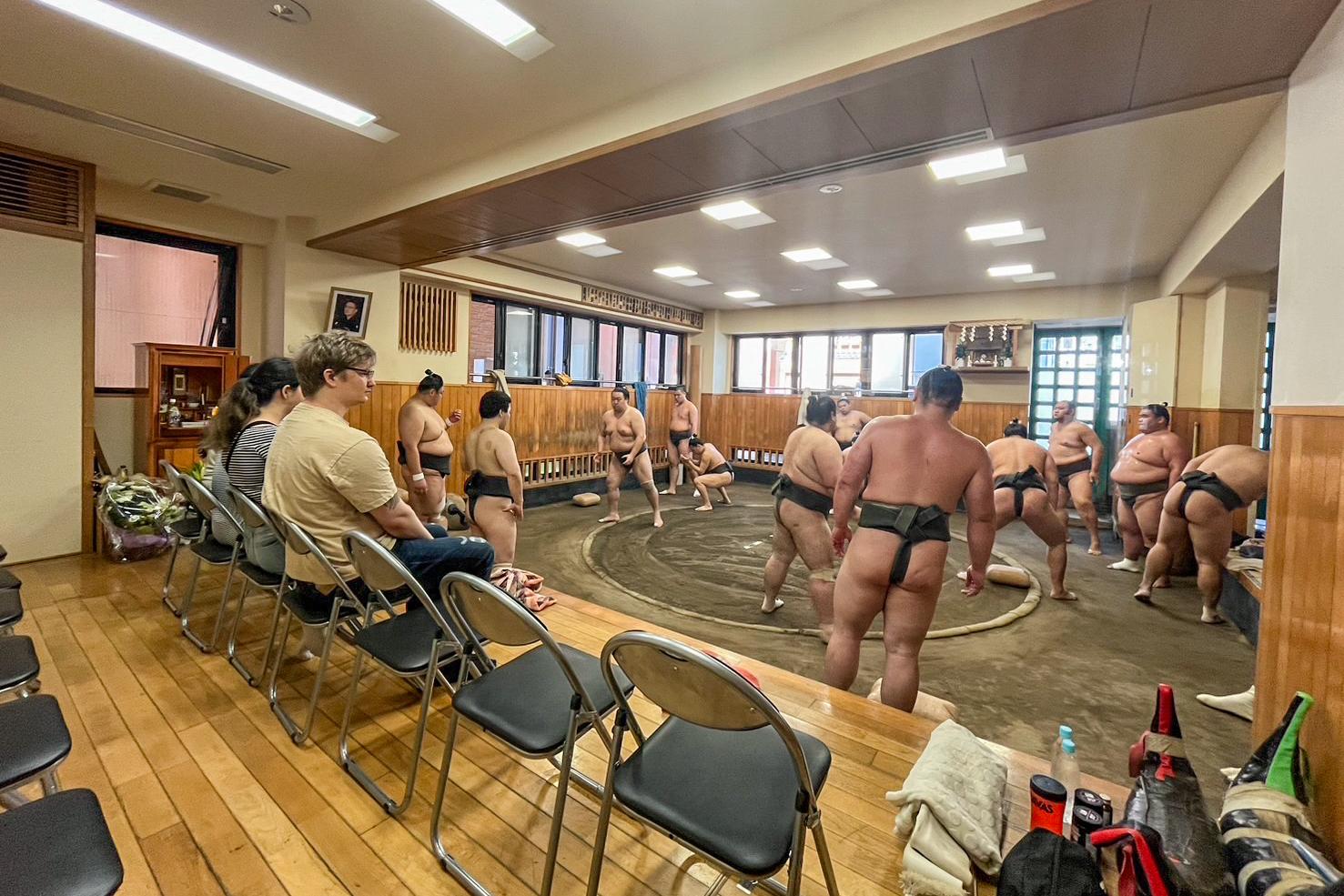
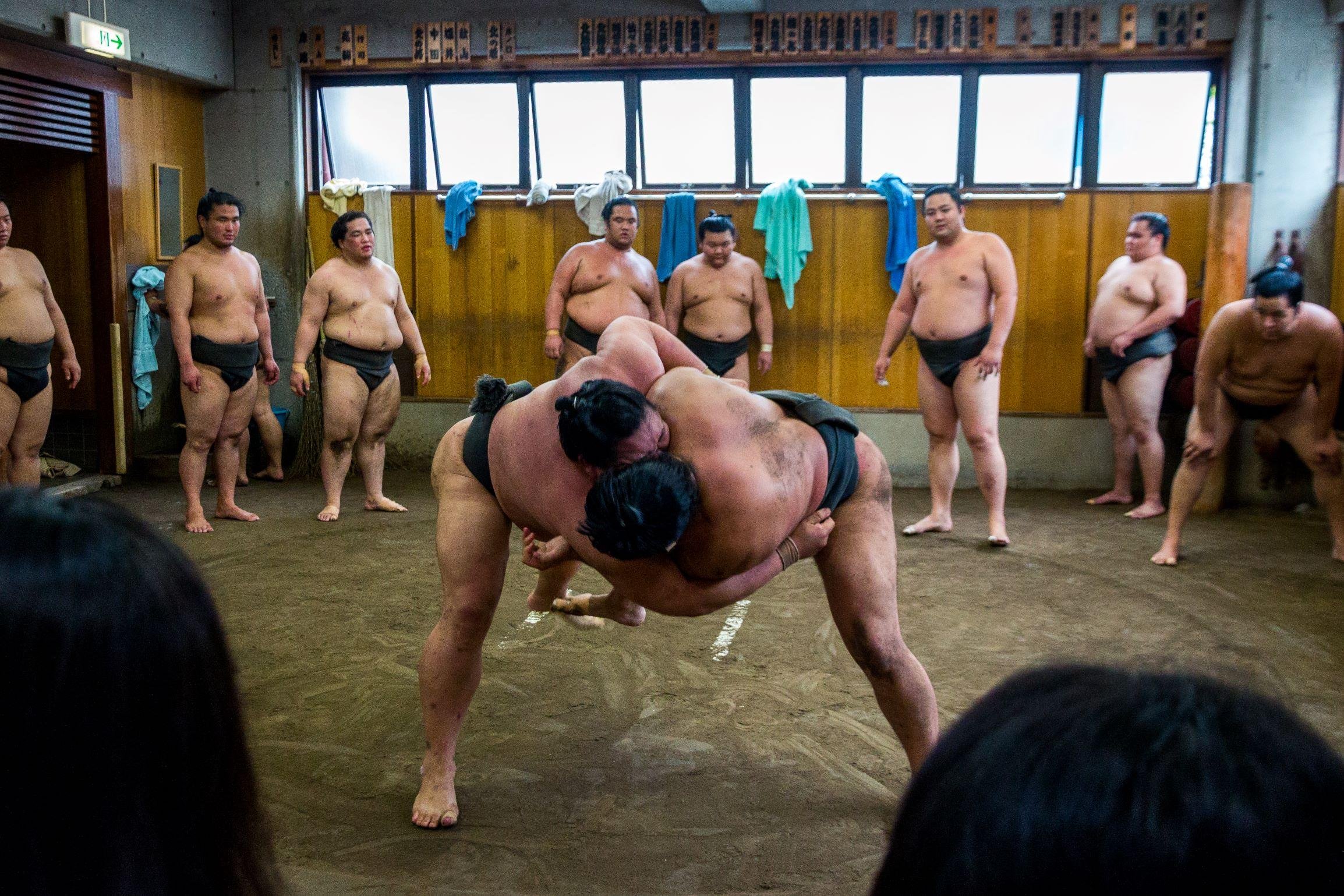
The Sand Ring

The central clay dohyo where wrestlers engage in intense drills and practice matches daily.

Head to head

Free Exterior Viewing vs Paid Tokyo Sumo Morning Practice Tour With Ring Side Seats

These experiences serve different goals, with the open-access stable window offering spontaneous observation, while the tokyo sumo morning practice tour with ring side seats provides professional context and intimate proximity to the rikishi.

Feature Top pick Public Window Viewing Guided Sumo Stable Tour
Access point
Private indoor ring-side area
Interaction level
Direct proximity to practitioners
Commentary availability
Professional guide insights
Price
18,000–25,000 JPY
Photo opportunities
Designated session access
Schedule flexibility
Pre-booked time slots

Verdict: Choosing a tokyo sumo morning practice tour with ring side seats tickets arrangement is ideal for those seeking a deep-dive cultural immersion, whereas the public window is best for those prioritizing a casual, no-cost glimpse into traditional keiko training.

How your ticket works

Book your ticket in 3 steps

  1. 01

    Book online

    Choose your ticket, select your date, and reserve in under two minutes. Secure checkout handled by our verified partner.

  2. 02

    Receive your mobile voucher

    Instant confirmation by email, with a mobile voucher you can save offline. No printing, no queuing at a collection desk.

  3. 03

    Show & enter

    Arrive at the entrance, show your voucher on your phone, and walk in. Most tickets include priority or skip-the-line access.

Plan your visit

Everything you need to know before you go

Practical details for your visit straight from our verified partners — hours, access, rules, and how to get there.

Open today · 07:30–09:30
Opening hours
07:30–09:30
Address
2-47-2 Nihombashihamacho, Chuo-ku, Tokyo 103-0007, Japan
Viewing access
Exterior window viewing only
Best arrival window
07:30–09:00
Navigation
Confirm daily schedule at arashio.net before arrival
Mon
07:30–09:30
Tue
07:30–09:30
Wed
07:30–09:30
Thu
07:30–09:30
Fri
07:30–09:30
Sat
Closed
Sun
Closed
Location

Address
2-47-2 Nihombashihamacho, Chuo-ku, Tokyo 103-0007, Japan
Navigation
Confirm daily schedule at arashio.net before arrival

Dress code

Casual and respectful attire is encouraged as you are observing a serious training environment. Ensure your clothing is clean and modest to reflect the solemnity of the ritual.

Bags & security

Keep all belongings with you and ensure they do not obstruct the walkway or the street-side viewing area. Security is maintained by the stable staff, and cooperation with their requests is mandatory.

Photography

Photography is permitted from the exterior viewing window, but flash photography is strictly prohibited to avoid distracting the wrestlers. Respect the privacy of the stable members at all times.

Accessibility

The viewing area is located on the ground level along the street, making it accessible for most visitors. Please be aware that there is no formal seating for the public.

What to bring

  • Smartphone or camera
  • Portable battery
  • Warm layers for autumn mornings
  • Quiet footwear
  • Small bag for personal items

Not allowed

  • Flash photography
  • Smoking
  • Loud conversation
  • Large backpacks
  • Tripods
  • Strollers in narrow areas
  • Food
  • Alcoholic beverages
  • Running near the stable
  • Obstructing the sidewalk

Families & strollers

Families are welcome to observe the tokyo sumo morning practice tour with ring side seats, provided children remain quiet and do not disturb the training. Supervision is required to ensure a peaceful atmosphere for everyone.

Food & drink

Eating and drinking are strictly prohibited at the viewing area. Please refrain from bringing snacks or beverages while observing the training session.

Around your visit

Everything else worth knowing

Best time to go, insider tips, nearby landmarks, and the cancellation fine print — flip through to skim what matters to you.

Cancellation policy

Flexible, no hidden fees.

As public viewing from exterior windows is free of charge (0 JPY), there is no cancellation or refund policy. For specific paid tours, please refer to the individual operator's terms.

About

The place, in context

Arashio stable opens its practice floor to visitors at 07:30 five mornings a week, a privilege fewer than eight Tokyo beya extend to the public. The two-hour asageiko sessions expose the 15,000-repetition training regimen that transforms young recruits into sekitori — top-division wrestlers who earn salaries and wear silk mawashi. Founded in 1996 by former ōzeki Mōkonami, Arashio beya in Nihombashi Hamacho operates within the Japan Sumo Association's strict protocol: visitors sit in seiza on tatami behind a low barrier, cameras silent until the final photo opportunity, while wrestlers execute butsukari-geiko collision drills and sanban-geiko sparring matches under the oyakata's watchful calls. Sumo's morning practice culture descends from Edo-period heya discipline, when stables functioned as closed apprenticeships and public viewing was forbidden. The 1990s liberalization allowed select beya to admit small observer groups, creating a Tokyo ritual that exists nowhere else in Japan. Arashio stable's dohyo — a clay ring rebuilt monthly with river sand and rice-straw bales — sits beneath Shinto tassels that sanctify the space as a kamiza, a seat of the gods. Wrestlers purify the ring with salt before each bout, a gesture rooted in the sport's 1,500-year lineage as a Shinto harvest rite. The stable's chanko-nabe cauldron simmers in an adjacent kitchen from 05:00, producing the protein-heavy stew that fuels the caloric demands of sekitori life. Ringside seats place observers within arm's reach of 180-kilogram athletes executing tachi-ai charges at 8 meters per second. The impact vibrates through the floorboards; the scent of sweat and bintsuke hair oil permeates the keikoba. English-speaking guides contextualize the yokozuna's rare appearances, explain the hierarchy visible in mawashi color and topknot style, and decode the oyakata's barked corrections. These guided tokyo sumo morning practice tour with ring side seats experiences bridge the cultural gap that raw observation cannot, transforming athletic spectacle into anthropological encounter. Post-practice, wrestlers queue for the mandatory group photograph — a rare breach of protocol granted only to beya with stable tourism partnerships. Arashio beya closes practice during honbasho tournament months (January, March, May, July, September, November) when wrestlers relocate to Ryogoku Kokugikan. Off-season training maintains its intensity regardless of spectators, making summer and winter the most accessible windows for tokyo sumo morning practice tour with ring side seats tickets. The stable's location in Chuo-ku, three minutes from Hamacho Station, positions it within Tokyo's historic shitamachi — the low-lying merchant quarters that birthed Edo's sumo culture before the sport's nationalization in the Meiji era.

"The impact vibrates through the floorboards; the scent of sweat and bintsuke hair oil permeates the keikoba."
Your experience

What a tour day looks like

A step-by-step walkthrough of the visit — what you'll see, how long each stage takes, and the details that matter.

You arrive at 07:25 in Nihombashi Hamacho, where residential towers give way to the stable's discreet entrance at 2-47-2. Your guide ushers you into a genkan where street shoes swap for provided slippers, then leads you up narrow stairs into the keikoba viewing gallery. Cushions line the tatami perimeter three meters from the dohyo edge. You kneel in seiza as the first wrestlers — young jonokuchi rank, topknots small and tight — begin shiko leg-stomping exercises that shake dust from the clay ring. By 08:00 the sekitori enter: senior rikishi in silk mawashi, their bodies dense and purposeful. Butsukari-geiko begins — one wrestler braces while his partner drives full-force into his chest, thirty consecutive collisions that produce percussive slaps audible across the room. You watch forearm veins bulge, watch the dohyo's rope boundary flex under redistributed weight. Between bouts, wrestlers crouch at the ring's edge, breathing through lactic burn, while junior apprentices sprint to offer ladles of water. The oyakata sits on a raised platform calling technique corrections in rapid Japanese your guide translates in whispers. At 09:15 practice concludes with ceremonial salt throws. Wrestlers bow to the dohyo, then line up for the group photograph — you stand among them, their shoulders damp, their expressions neutral. Outside, the chanko kitchen offers a glimpse of the morning's stew before you exit into the Chuo-ku morning, your legs numb from seiza, your phone full of images that capture the physical reality of a disappearing athletic tradition.

Frequently asked

Frequently asked questions about tokyo sumo morning practice tour with ring side seats tours

Is the tokyo sumo morning practice tour with ring side seats free?

Viewing practice from the public exterior windows at the Arashio stable is 0 JPY. Paid tour options providing closer viewing seats may incur their own fees as dictated by the operator.

What are the opening hours for the tokyo sumo morning practice tour with ring side seats?

The stable is generally open for practice viewing from 07:30–09:30 on weekdays.

Are reservations required for a tokyo sumo morning practice tour with ring side seats?

No, reservations are not required for free public viewing from the street-side windows.

What is the best time to arrive for the tokyo sumo morning practice tour with ring side seats?

The best arrival window is 07:30–09:00 to ensure you see the session before it concludes.

Is photography allowed at the tokyo sumo morning practice tour with ring side seats?

Yes, photography is allowed, but flash is strictly prohibited to respect the wrestlers.

Can I enter the building for a tokyo sumo morning practice tour with ring side seats?

No, for the Arashio stable, public viewing is conducted exclusively from the large exterior windows.

Are children allowed at the tokyo sumo morning practice tour with ring side seats?

Yes, families are welcome, provided children remain quiet and respectful throughout the session.

What happens if the practice is cancelled?

Since the practice is a working session, it is subject to daily schedule changes without notice; always check the official site before visiting.

Are there nearby attractions to visit after my tokyo sumo morning practice tour with ring side seats?

Yes, the Ryogoku Kokugikan and various historic shrines are located within a short distance of the stable.

Do I need tickets for the tokyo sumo morning practice tour with ring side seats?

You do not need tickets for standard street-side viewing, which is free of charge for all visitors.